Uncle Ho returns to the country (January 28, 1941) - A historic decision paving the way for revolutionary victory
On January 28, 1941 after 30 years of tireless journeys in search of a path to national salvation, leader Nguyen Ai Quoc - President Ho Chi Minh returned to the Fatherland to directly lead the Vietnamese revolution. This momentous historical event not only opened a decisive turning point for the cause of national liberation but also laid the foundation for the formation and development of Viet Bac revolutionary base, in which Cao Bang was the starting point and Thai Nguyen - with ATK Dinh Hoa - became the strategic direction center, associated with the victory of the August Revolution in 1945.
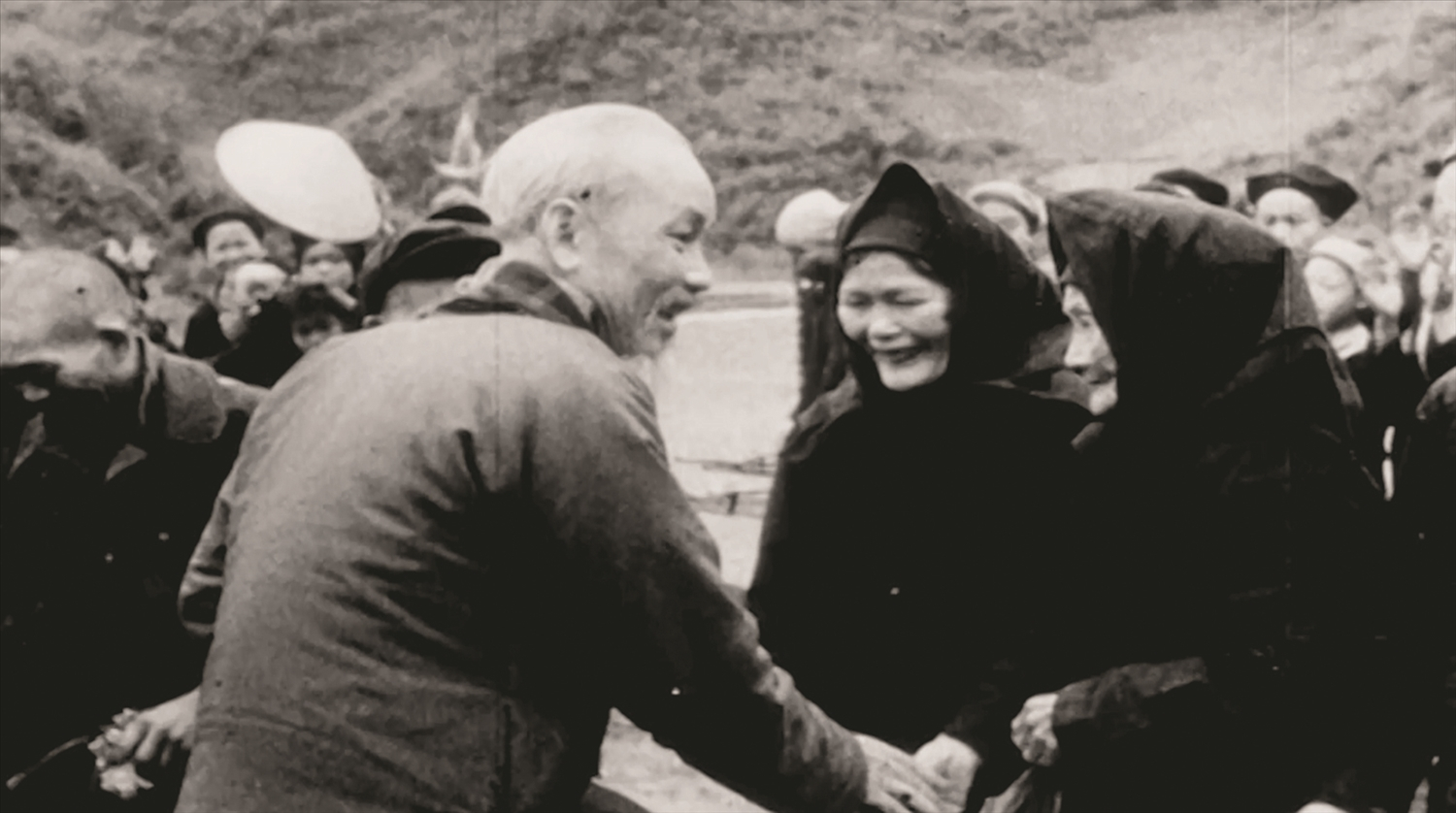
Uncle Ho shaking hands and inquiring after elderly people when visiting Pac Bo, Tan Suu Spring 1961. (Documentary photo)
Strategic historic decision
In the early years of the 40s of the 20th century, the world and domestic situation underwent many profound changes. World War II entered a fierce stage, fascism gradually weakened and revolutionary movements in colonial countries rose high. Domestically, the conflict between the entire Vietnamese nation and the colonialists and fascists became increasingly acute, requiring the revolution to have a clear line and direct, unified leadership.
In that context, the decision of leader Nguyen Ai Quoc to return home after 30 years of seeking national salvation was a strategic choice, reflecting his far-sighted vision, ability to seize opportunities and steadfast political resolve. The event of January 28, 1941 marked a major historical turning point: from that moment on, the Vietnamese revolution was directly led by the founder and architect of the Communist Party of Vietnam, ensuring unity in ideology, politics and organization throughout the Party and the entire nation.
From then on, national liberation was identified as the central and overarching task, providing both theoretical and practical foundations for all major decisions of the Vietnamese revolution in the subsequent period.
|
In choosing Cao Bang as the place to return home, leader Nguyen Ai Quoc observed: “Cao Bang base will open up great prospects for our revolution. Cao Bang has had a strong movement for a long time and borders the frontier, making international communication very convenient. However, from Cao Bang, it is necessary to expand to Thai Nguyen and further down in order to connect with the whole country. Only by linking the movement with Thai Nguyen and the entire nation can we, when launching armed struggle, advance when conditions are favorable and hold our ground when facing difficulties”.
|
From Cao Bang to Viet Bac - forming an interconnected revolutionary base
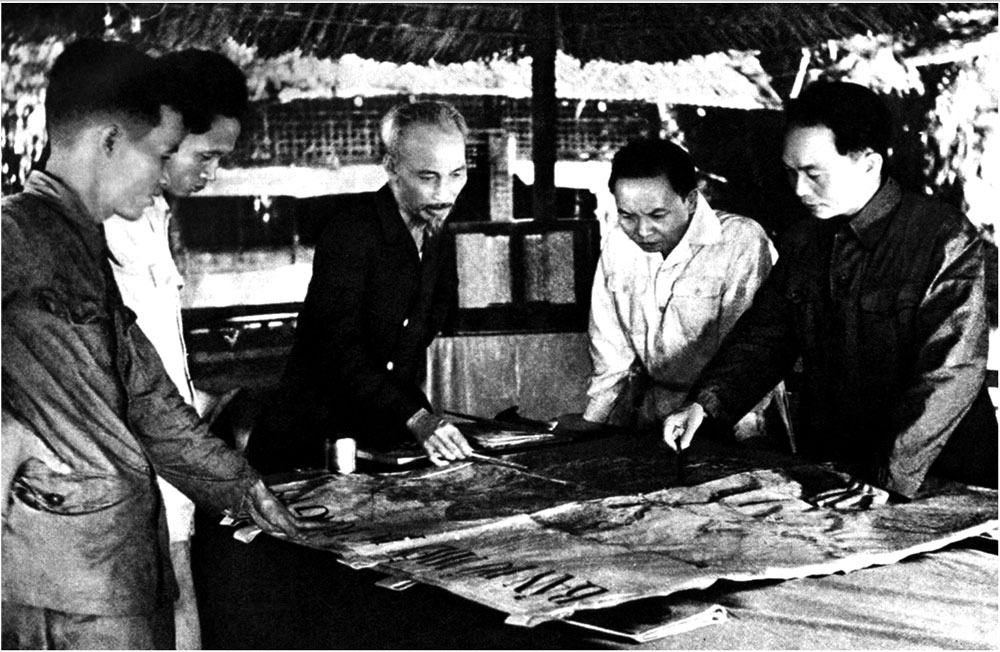
On December 6, 1953, at Tin Keo, Phu Dinh Commune, Dinh Hoa District (now Phu Dinh Commune, Thai Nguyen province), President Ho Chi Minh and Party and Government leaders discussed the Winter-Spring 1953 - 1954 combat plan and opened the Dien Bien Phu campaign. (Documentary photo)
Upon returning to the Fatherland, President Ho Chi Minh chose Cao Bang as the base for revolutionary activities. From here, he gradually expanded the scope of direction, building Viet Bac base system - an interconnected strategic space including many provinces, in which Thai Nguyen played a particularly important role.
Under the chairmanship of President Ho Chi Minh, the 8th Central Conference (May 1941) completed the national liberation revolution line, identifying the immediate goal as gaining independence for the nation, placing national interests above all and first of all. This was a decision of historical significance, paving the way for gathering forces and building the great national unity bloc through Viet Minh Front.
Viet Bac base was thereby gradually consolidated and expanded, becoming the direct rear, a place to prepare political and military forces and organization for the General Uprising. In that system, Thai Nguyen - with its position as the "gateway" connecting Viet Bac with the Northern Delta - played a particularly important role in terms of military strategy, logistics and direction of the revolutionary movement nationwide.
In 1945, when revolutionary conditions ripened, President Ho Chi Minh and the Party Central Committee chose ATK Dinh Hoa (Thai Nguyen) as the center to direct the revolution nationwide. Here, many historic decisions vital to the nation's destiny were issued.
From ATK Dinh Hoa, important directives and orders were transmitted quickly and promptly; especially the establishment of the National Uprising Committee and the issuance of Military Order No. 1, launching the General Uprising to seize power nationwide. It was from this base that the uprising order spread strongly, creating a boiling revolutionary atmosphere, bringing the August Revolution of 1945 to rapid victory.
Thai Nguyen was also one of the localities to seize power early, contributing to creating momentum and strength for revolutionary movements in many other provinces and cities. That reality affirmed the central, brain-like role of ATK Dinh Hoa in the decisive stage of the Vietnamese revolution.
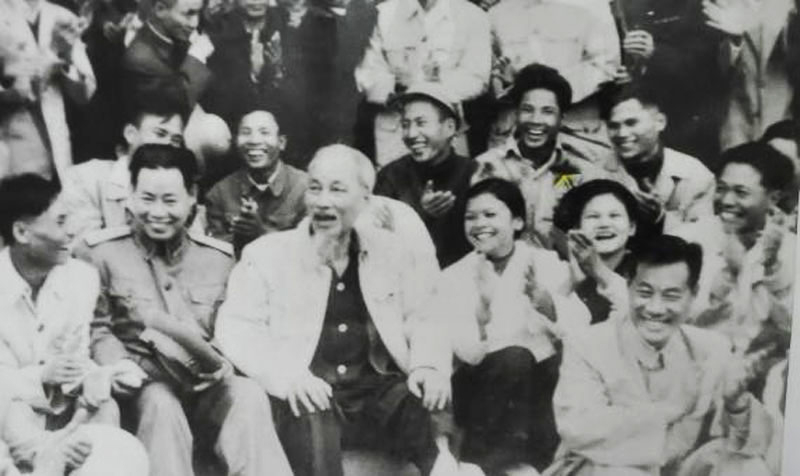
Uncle Ho talking with cadres and workers at the Gang Thep Industrial Zone construction site. (Documentary photo)
Viet Bac’s deep affection – Strength drawn from the people
Throughout the arduous years of revolutionary activities in Viet Bac, President Ho Chi Minh always received the profound affection, protection and support of the People. It was not merely material help, but a sacred, durable affection, forged from the People's ironclad faith in Uncle Ho - the leader devoted to the country and the people. The People of Viet Bac considered Uncle Ho as a family member, willing to share every bowl of rice and piece of clothing, hiding Uncle Ho from the enemy's fierce hunt, despite dangers. In years of shortage, compatriots still yielded their share of fullness and warmth to the revolution, because they believed that following Uncle Ho and the Party was the right path to regain independence and freedom for the nation. That affection was also shown in loyalty, faithfulness and wholehearted dedication to the resistance war, even if sacrificing personal interests or even lives. It was the flesh-and-blood bond between Uncle Ho and the People that created a very special relationship: The leader trusted the people, the people respected and protected the leader. From that sincere affection, Viet Bac base became a solid rear, a place nurturing the will, spirit and forces for the Vietnamese revolution.
It can be said that the great affection of the People of Viet Bac for Uncle Ho was not only an expression of reverence for a great man but also vivid proof of the strength of the people's hearts. That very strength contributed to making the glorious victories of the revolution, affirming a sustainable truth: When the revolution is attached to the People, trusted and protected by the People, no force can subdue it.
Commemorating the event of Uncle Ho’s return to the country (January 28, 1941) is an occasion for the entire Party, people and armed forces to revisit a glorious chapter of history and reaffirm the immense contributions of President Ho Chi Minh to the Vietnamese revolutionary cause. It is also an opportunity to further educate and promote patriotism, self-reliance, resilience and the spirit of great national unity - enduring values that constitute the strength of Vietnam.